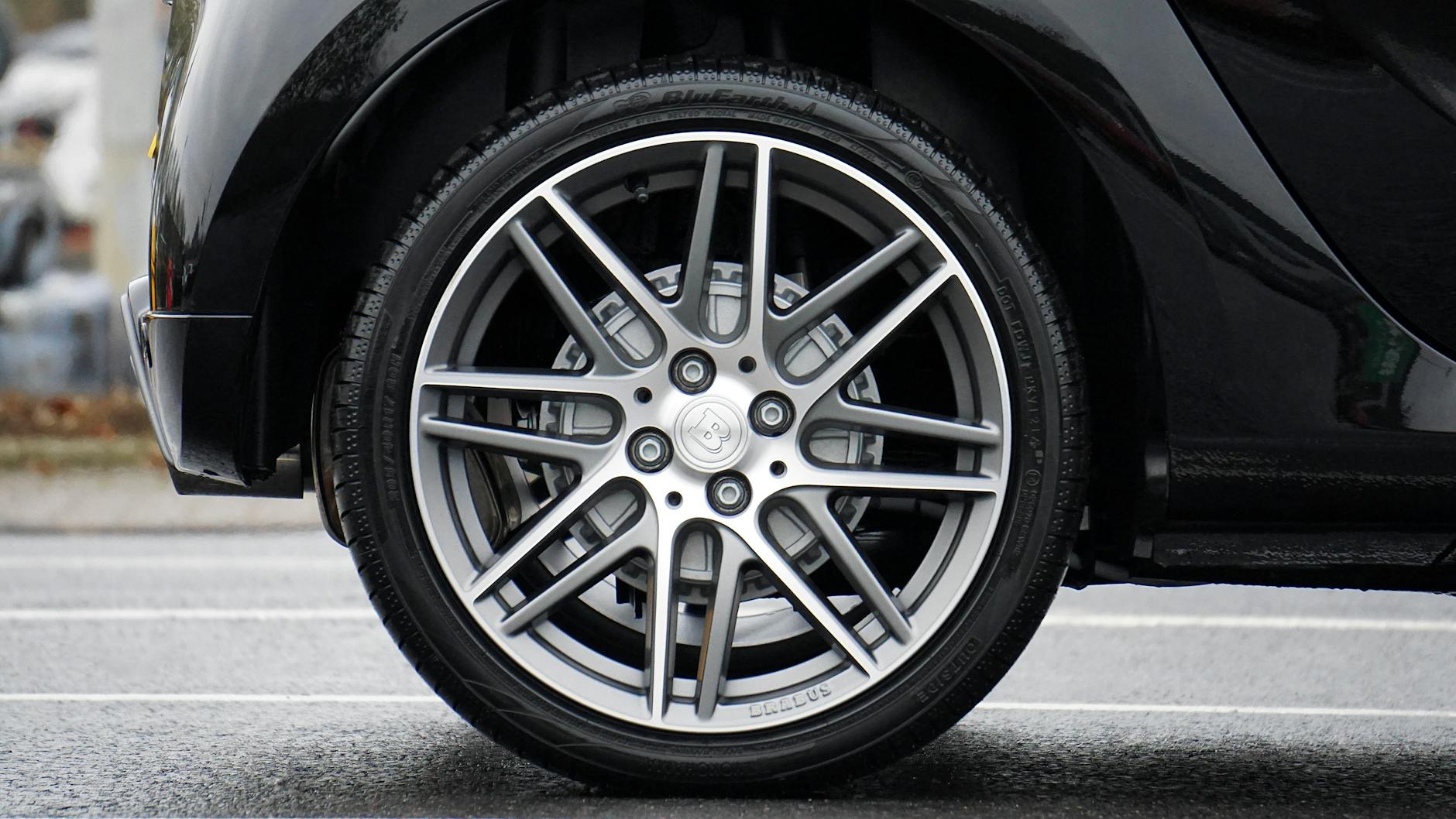
Forged vs Flow Form vs Cast Wheels: The Real Differences
If you've spent more than ten minutes shopping for custom wheels, you've run into all three terms: forged, flow form, and cast. Brands use them like marketing ammunition, and the definitions get blurry fast. Some companies call their wheels "flow forged" or "rotary forged" to make cast-adjacent products sound more premium. Others charge forged prices for wheels that don't deliver forged performance. This guide cuts through it — how each construction method actually works, what the real-world differences are, and which one makes sense depending on what you're building and what you're spending.
How Cast Wheels Are Made
Casting is the oldest and most common wheel manufacturing method. Molten aluminum alloy — typically A356 — gets poured or forced into a mold, allowed to cool, and then machined to final dimensions. There are a few variations:
Gravity casting is the most basic. Liquid metal flows into a mold under its own weight. It's cheap and fast, but the resulting grain structure is coarse and inconsistent, with microscopic porosity (tiny air pockets) baked in. These wheels need extra material thickness to hit structural targets, which means more weight.
Low-pressure casting (LPC) pushes the alloy into the mold under controlled pressure, reducing porosity and improving consistency compared to gravity casting. Most mid-tier aftermarket cast wheels are made this way. You'll see these from brands like Enkei, Motegi, and countless others — perfectly adequate for street use, but not what you'd call performance material.
Counter-pressure casting and similar variants add more process control, closing the gap with flow forming somewhat. Still cast, though.
The core limitation of casting is metallurgical. Cooling from liquid to solid without mechanical work leaves the aluminum with a random, non-aligned grain structure. That means lower tensile strength per unit of material — so the wheel needs to be heavier to be safe. A typical cast 18×8.5 wheel for a platform like an F30 335i might weigh 24–27 lbs. That matters for unsprung mass, ride quality, and anything performance-related.
How Flow Forming Works
Flow forming — also called flow forging, rotary forging, or spin forming depending on who's marketing it — starts with a low-pressure cast wheel blank. But instead of machining it to final shape, manufacturers clamp the barrel (the cylindrical section the tire mounts on) between rollers and spin it under heat and pressure. The rollers stretch and compress the barrel material outward to final width.
That mechanical working is the key. The aluminum grain structure in the barrel gets elongated and aligned, dramatically improving tensile strength and fatigue resistance in that section specifically. The face of the wheel — spokes, center hub area — remains cast. So flow formed is a hybrid: cast face, mechanically worked barrel.
The practical result is a wheel that's meaningfully lighter than a comparable all-cast piece — often 15–20% — with a barrel that behaves more like forged material under stress. A flow formed 18×9.5 for a Mustang GT might land around 20–22 lbs versus 25+ for a comparable cast wheel. For a flow formed vs forged wheels comparison at the detail level, the gap in face strength and total weight still exists, but flow forming closes it considerably.
Flow formed wheels are excellent value for street performance builds, track days where weight matters but budget is real, and daily-driver performance cars where you want better dynamics without paying full forged prices. Think of them as the smart middle ground — not a compromise, exactly, but a deliberate tradeoff.
How Forged Wheels Are Made
Forging starts with a solid billet of aluminum alloy — usually 6061-T6 or 6082-T6 — and subjects it to massive compressive force (typically 5,000–10,000 tons on industrial presses) while the metal is heated but still solid. That force doesn't melt the aluminum; it reshapes it. The grain structure gets compressed and aligned throughout the entire piece, not just the barrel. The result is material that's fundamentally denser and stronger than anything cast.
After the initial forge, the blank goes through extensive CNC machining to reach final geometry — spoke profiles, center bore, lug holes, face design. This is where you see the most machining time and therefore the most cost. A complex deep-concave spoke design on a forged wheel might require multiple setups and hours of CNC time per wheel.
Heat treatment follows machining, then finishing. The total process is genuinely labor and capital intensive, which is why legacy forged wheel brands charge $800–$2,500 per wheel without blinking. But the output is worth understanding: a forged 19×9.5 for a C8 Corvette can come in under 18 lbs with no structural compromise. A cast equivalent at the same spec would be 24–26 lbs. That's 6–8 lbs per wheel, or up to 32 lbs off the corners of the car — unsprung mass that directly affects ride, handling, and brake performance.
Forged wheels also respond better to impacts. Cast wheels tend to crack under sharp curb strikes or pothole impacts. Forged aluminum deforms — it bends rather than fractures, which is both safer and more repairable in many cases.
For a deeper dive into the manufacturing and material science, cast vs forged wheels is worth reading alongside this piece.
The Weight Difference in Real Numbers
Weight is where the rubber meets the road — literally. Here's a realistic comparison across construction types for an 18×9.5 wheel in a relatively simple design:
- Gravity cast: 26–30 lbs
- Low-pressure cast: 23–27 lbs
- Flow formed: 19–22 lbs
- Forged (monoblock): 16–20 lbs
On a Model 3 running 19-inch wheels, dropping from cast to forged at each corner means the electric motor isn't spinning up as much unsprung mass with every wheel rotation. Range improves slightly. Steering response sharpens. Ride quality over rough pavement gets noticeably better because the suspension can react faster when the wheel weighs less.
On a track car — say, a Mustang GT on a road course — every lb of unsprung weight reduction is worth multiple lbs of chassis weight reduction in terms of handling response. That's not marketing math; it's physics.
Strength and Safety: What Actually Differs
Tensile strength matters most in two scenarios: fatigue from repeated loading (road imperfections, cornering forces applied thousands of times over the wheel's life) and impact events (potholes, curbs, track kerbs).
6061-T6 aluminum in a properly forged and heat-treated wheel has a tensile strength around 310 MPa. Well-cast A356-T6 comes in around 230–260 MPa. Flow formed barrels hit somewhere between those figures for the barrel specifically, with the face closer to cast figures.
Practically: cast wheels fail by cracking, often catastrophically. Forged wheels fail by bending, usually giving you warning and time to react. On public roads this distinction rarely matters — cast wheels are JWL/VIA certified and perfectly safe for street use. But if you're tracking the car, autocrossing, or running a performance build hard, the margin matters.
Price Reality: Why Forged Costs More (and Doesn't Have To)
Forged wheels from legacy brands — HRE, BBS, Forgeline, ADV.1 — run $1,200–$3,000 per wheel at retail. A set for an F30 335i or Porsche 911 can run $8,000–$12,000 before tires. Flow formed wheels from reputable brands sit in the $200–$500/wheel range. Cast starts at $80–$200/wheel for economy product.
The price gap between cast and forged is real because the process is genuinely more expensive. But the gap between what forging costs and what premium brands charge is largely brand tax. A 15-year OEM forging partner running the same 6061-T6 billet process on the same class of presses, with the same CNC equipment, doesn't suddenly produce worse wheels because it's not selling them under a famous logo.
That's the core of what ForgedToFit does — custom forged and flow formed wheels built to order through an established OEM manufacturing partner, at 50–70% less than what legacy brands charge for equivalent construction. If you want to build your own forged wheels from a design you have in mind, or choose from existing designs, the process starts with a quote and 3D CAD proof before anything gets made.
Terminology Traps to Watch For
The wheel industry has a terminology problem. Here are the phrases that get misused most often:
"Flow forged" — Sometimes means genuine flow forming. Sometimes means a regular cast wheel with a marketing name. Ask the manufacturer whether the barrel is mechanically worked after casting. If they can't answer clearly, that's your answer.
"Rotary forged" — Same situation. Enkei's RPF1 is genuinely flow formed (they call it MAT process). Other brands use "rotary forged" for what is essentially a standard LPC wheel. Check the weight; a truly flow formed wheel should be meaningfully lighter than a comparable cast piece.
"Forged face" or "forged center" — This describes 2-piece and 3-piece wheel construction where the face is forged and the barrel is spun steel or cast. Legitimate construction, common in 3 piece forged wheels setups from companies like Work Wheels and Rotiform. Not the same as a fully forged monoblock.
"Aircraft grade aluminum" — Meaningless without a spec. 6061-T6 is the relevant designation for forged wheels. Ask for it by name.
Which Construction Is Right for Your Build?
This isn't a one-size answer. Here's how to think about it by use case:
Daily driver, budget priority: A quality low-pressure cast wheel from a reputable manufacturer is fine. JWL certified, properly sized, from a brand that stands behind the product. Don't pay for forging you don't need.
Daily driver performance car, weight matters: Flow formed is the right call. You get most of the weight benefit at a fraction of forged pricing. For a Tesla Model 3, Subaru WRX, or Golf R this is usually the sweet spot.
Track car, serious driver: Forged. The strength margin, weight advantage, and failure mode characteristics are all meaningfully better. If you're putting real lateral loads through the wheel repeatedly, you want forged material doing that work.
Show build or stance fitment: Forged gives you the ability to run aggressive offsets and fitments that cast wheels can't always support structurally. A custom offset wheels build on a Mustang GT running a wide-body kit with a 15mm front offset and aggressive lip — that needs forged strength to handle the geometry.
High-displacement truck or SUV: Flow formed or forged depending on load rating requirements. For something like an F-250 towing at capacity, you want the extra structural margin that forged or at minimum quality flow formed construction provides. Cast wheels on a heavily loaded truck are where you start pushing limits.
A Note on Multi-Piece Construction
One thing that changes the calculus: 2-piece and 3-piece forged wheels let you combine a forged face with a spun aluminum or steel barrel. This allows extreme width and offset customization that's hard to achieve in a monoblock because you're bolting or welding the components together after machining each piece independently.
2 piece forged wheels and 3 piece forged wheels tend to cost more than comparable monoblocks — more parts, more assembly, more hardware. But for wide-body builds, vintage restoration work, or highly custom fitments on platforms with unusual specs, they're often the only way to get exactly what you need.
1 piece forged wheels (monoblocks) are generally stiffer, lighter for a given design, and lower maintenance since there are no barrel bolts or seals to worry about. For most performance builds, monoblock forged is the better choice if the fitment works.
How to Verify What You're Actually Buying
Before you hand over money, ask these questions:
- What alloy spec? (You want 6061-T6 or 6082-T6 for forged; A356-T6 is acceptable for cast.)
- What's the wheel weight for my specific size? Compare it against the expected range above.
- Is it JWL or VIA certified? This is the minimum standard for street use.
- For flow formed claims: is the barrel mechanically worked, or is this a marketing term?
- What's the warranty? A proper forged wheel from a serious manufacturer should carry at least a 2-year structural warranty; ForgedToFit backs theirs for 5 years.
If a seller can't answer question 1 or 2 confidently, walk.
The difference between forged, flow form, and cast custom wheels comes down to how the metal is worked — and how much that working costs to do right. Cast is accessible and adequate for most applications. Flow formed bridges the gap intelligently. Forged is the correct answer for builds where performance, weight, or longevity are non-negotiable. Knowing which category you actually need — and verifying that what you're buying matches the claim — is most of the battle.
Frequently asked questions
Is flow formed the same as forged?
No. Flow forming starts with a cast blank and mechanically works only the barrel under heat and pressure. Forging works a solid billet throughout the entire wheel. Flow formed wheels are stronger and lighter than all-cast wheels, but a fully forged monoblock has better tensile strength, lower weight, and superior impact resistance across the whole wheel — not just the barrel.
How much lighter are forged wheels than cast?
Typically 20–35% lighter for a comparable size and design. A cast 18×9.5 might weigh 24–27 lbs; a forged version of the same spec often comes in at 16–20 lbs. Flow formed splits the difference at roughly 19–22 lbs. Exact numbers vary by design — spoke count, width, and face depth all affect final weight.
Are cast wheels safe for track use?
For occasional track days on a street car, certified cast wheels are generally fine. For serious or repeated track use — multiple sessions, high lateral loads, kerb strikes — forged construction is strongly preferable. Cast wheels fail by cracking, often suddenly. Forged aluminum tends to deform rather than fracture, which is a safer failure mode.
What does '6061-T6' mean and why does it matter for forged wheels?
6061-T6 is a specific aluminum alloy designation. The 6061 refers to the alloy composition (magnesium and silicon as primary alloying elements); T6 refers to the heat treatment process applied after forging. Together they produce tensile strength around 310 MPa — meaningfully higher than the A356-T6 used in cast wheels (230–260 MPa). When a wheel brand claims forged construction, asking for the alloy spec is the fastest way to verify it.
Why do some brands call their wheels 'flow forged' or 'rotary forged' when they're really cast?
Because there's no regulated standard for wheel terminology in most markets. Brands can apply these terms loosely. The tell is weight: a genuinely flow formed wheel should be 15–20% lighter than an equivalent all-cast piece. If the claimed flow formed wheel weighs the same as a cast competitor, it's likely just a marketing label on a standard low-pressure cast wheel.
Can I get custom forged wheels without paying legacy brand prices?
Yes. The actual cost of OEM-quality forging — the press time, CNC machining, heat treatment, and finishing — is a fraction of what HRE or ADV.1 charges. Brands that manufacture through established OEM forging partners and sell direct can offer the same 6061-T6 forged construction at 50–70% less. The wheel is built the same way; what you're not paying for is the brand tax.